


Everything you need to know about GenZ protest and how the government fell down in 48 hrs
- Sangita Poudel
- Sep 19, 2025
- 5 min read
How it started?
It began with a short TikTok calling out “nepo kids”(especially politicians childrens)—the sense that power, access, and opportunities kept rotating within the same circles. The clip wasn’t polished; it was raw and specific. What made it explode wasn’t just anger—it was recognition. Comments turned into stitched videos; stitched videos turned into neighborhood chats; chats turned into plans. Within days, young people were asking sharper questions about fairness, accountability, and who gets heard. It wasn’t a leader that kicked it off. It was a feeling we already had—finally said out loud.
The social-media ban for speaking against corruption
As the discussion expanded, the government decided to limit certain platforms, referencing new registration and compliance regulations. Whether legal or not, it seemed like the volume on public discourse was being lowered. For students and creators, social apps are more than just entertainment; they are essential for organizing, learning, selling, and expressing themselves.
What the state said: compliance, safety, order.
What we heard: less visibility, fewer questions, smaller voice.



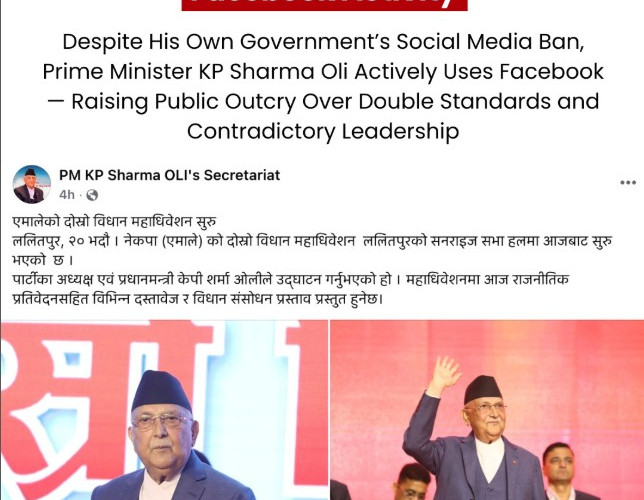


Image and Video Source: IN-DEPTH STORY
Gen Z’s peaceful protest
The online momentum transitioned into an offline presence. Students arrived with water, masks, and trash bags. Volunteer marshals created human chains to keep the footpaths unobstructed. Homemade signs declared, “We want answers, not slogans.” The goal wasn’t chaos but clarity: show up, be counted, and maintain calm.
Near Parliament on September 8, authorities used tear gas, batons, rubber bullets, and, in some areas, live ammunition. By the evening, at least 19 young and school-going children were killed, with hundreds more injured. Rights groups and reporters verified that students were among the deceased, including a 12th-grade boy who was brought to the Trauma Centre and declared dead upon arrival.
Rallies were planned via alternative channels (SMS, private groups, word of mouth).
Clear ground rules: no stones, no hate speech, no property damage.
Community care stations for first aid and phone charging.
(Note: the government lifted the platform ban the next day after the killings were reported.)





Image and Video Source: IN-DEPTH STORY
How it went wrong—and what followed
Grief turned into anger. On September 9, some groups broke away and attacked state property; fires and vandalism spread to significant government buildings, including the parliament and the Supreme Court, as curfews and army deployments were implemented. Later official counts increased the total death toll to over 70 and reported more than 2,000 injured nationwide. Human Rights Watch also highlighted reports that infiltrators were involved in arson and looting, further obscuring the distinction between the peaceful movement and the ensuing violence.
Grief turned into anger. On September 9, some groups broke away and attacked state property; fires and vandalism spread to significant government buildings, including the parliament and the Supreme Court, as curfews and army deployments were implemented. Later official counts increased the total death toll to over 70 and reported more than 2,000 injured nationwide. Personal homes of the politicians, business buikdings and schools were set on fire. This is believed to an act of intrusion in a peaceful protest.
Pause. Reset. Elect: A People-Picked PM
Following several days of protests led by young people, organizers rallied around Karki—Nepal’s former Chief Justice—through a citizen vote conducted on Discord, which established a strong public mandate. President Ram Chandra Paudel subsequently appointed her as interim prime minister, making her Nepal’s first female PM, with the responsibility of stabilizing the nation and guiding it toward elections in March 2026. Her appointment represents a shift towards anti-corruption and transparency, highlighting the increasing influence of Gen Z's digital activism in mainstream politics.


Image and Video Source: IN-DEPTH STORY
What does the interim Government mean to Nepal?

Nepal's interim cabinet, headed by former Chief Justice Sushila Karki, was established in mid-September 2025 as a caretaker government following youth-led protests and the resignation of PM K.P. Sharma Oli. Its responsibilities include stabilizing the country, restoring civil liberties, investigating protest-related deaths, and organizing new elections now set for March 5, 2026. Karki—Nepal’s first female prime minister—has appointed a reform-oriented team (including Rameshwar Prasad Khanal for Finance, Kulman Ghising for Energy (The man who solved loadshedding problem in Nepal), and Om Prakash Aryal for Home), indicating a shift towards transparency and improved service delivery.
For citizens, this means:
(1) a definite election timeline (2) an opportunity to revamp governance and enhance anti-corruption initiatives
(3) a route to normalize daily life after the social media restrictions and deadly clashes that prompted the transition.
My personal take on: Daily Life, Re-building and Future
Stop glorifying people; praise work. Hold everyone—leaders, activists, influencers—to actions and results, not charisma.
It's not the responsibility of just one person to ensure that reform in Nepal occurs and leads to a corruption-free government.
Treat people as human. No saints, no demons. Expect imperfection, ask for improvement.
If you witness or hear about someone engaging in corruption, share the evidence so they can be held accountable.
Encourage reconstruction efforts by beginning with small initiatives to achieve a greater impact.
Beware of dishonest individuals posting emotional content on social media merely to sustain their business. Insist on transparency, demand apologies, and seek answers.

Image and Video Source: IN-DEPTH STORY
Lastly, we can support Sudan Gurung and Balen without turning them into untouchables.. When we put leaders on pedestals, they can start believing the myth, and we stop practicing oversight. Many enter public life with good motives; history shows how power and praise can warp them. Leaders aren’t gods who’ll solve everything, and treating them that way only sets up blame later. Respect the work, demand results, and keep accountability non-negotiable.
Sharing a piece of fact I know
Seeing Ullens School burn was personal for me. It’s where I grew up — a place that taught us more than exam scores and memorization. At Ullens, we were evaluated on how we showed up every day: our discipline, attendance, teamwork, presentations, and growth. That approach helped shift Nepal’s private-school culture away from rote learning toward holistic, student-centered education.
There’s also a big misconception circulating: that Ullens School “belonged to” Dr. Aarzu Rana Deuba. That’s not true. Ullens School is owned and operated by the Ullens Education Foundation (UEF), a not-for-profit company registered in Nepal. Dr. Deuba’s role has been Honorary Chairperson of the School Management Committee (SMC) — a statutory governance role under Nepal’s Education Act — not an owner or funder.
The school was funded by Guy Ullens (1935–2025) was a Belgian entrepreneur, art collector, and philanthropist. In Nepal, he and his wife Myriam created and funded the Ullens Education Foundation, which founded Ullens School (2006) and introduced progressive, student-centered/IB education—serving as founding patrons and benefactors; the school operates as a non-profit (not anyone’s private property).
On September 9, 2025, during the Gen Z protests, protesters set fire to the Ullens School campus in Khumaltar; police and fire engines were blocked from reaching the site. Whatever one’s politics, destroying a school only punishes students, teachers, and a model of education that has inspired others to improve.
I’ve seen Ullens since its early days. From that vantage point, I can say with confidence: Dr. Deuba did not fund or own the school. Ullens stands on the vision and philanthropy of the Ullens family and the work of UEF and its educators. Burning it didn’t correct a wrong; it damaged a public good.


Comments